

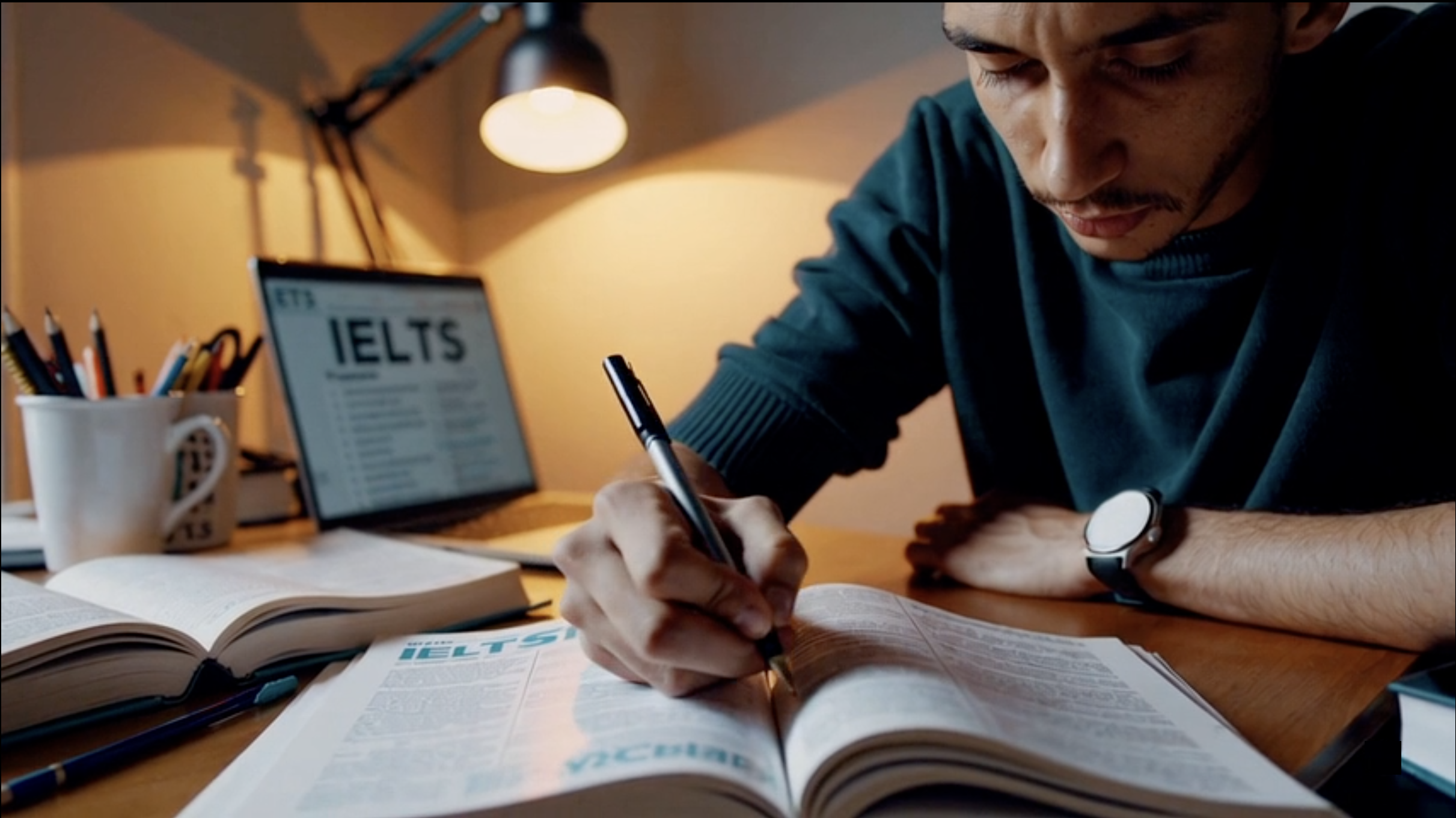
IELTS
International English Language Testing System
Â

Â
- Purpose:Â Designed to assess the language ability of candidates who need to study or work where English is the language of communication.
- Versions:Â IELTS Academic (for higher education) and IELTS General Training (for work or immigration).
- Acceptance:Â Accepted by over 10,000 institutions globally, including many German universities.
- Scoring:Â The IELTS is scored on a scale of 0-9 for each section (Listening, Reading, Writing, and Speaking). The overall band score is the average of these four scores.
Exam Structure and Format
- Listening (30 minutes):
- 4 sections with 40 questions total.
- Types of questions: multiple choice, matching, plan/map/diagram labeling, form/note/table/flow-chart/summary completion, sentence completion.
- Reading (60 minutes):
- 3 sections with 40 questions total.
- Types of questions: multiple choice, identifying information, identifying writer’s views/claims, matching information/headings/features/sentence endings, sentence completion, summary/note/table/flow-chart completion, diagram label completion, short-answer questions.
- Writing (60 minutes):
- Task 1: Describe a graph, table, chart, or diagram in 150 words.
- Task 2: Write an essay in response to a point of view, argument, or problem in 250 words.
- Speaking (11-14 minutes):
- Part 1: Introduction and interview (4-5 minutes).
- Part 2: Individual long turn (3-4 minutes).
- Part 3: Two-way discussion (4-5 minutes).
IELTS Fees
- The registration fee for the IELTS exam varies by country:
- India (INR): ₹15,500 – ₹16,250 (Depending on the location)
- Germany (EUR): €243 – €250
- United States (USD): $245 – $255
- Register for the IELTS through the official IELTS website.
Free Preparation courses with YouTube Channels
- IELTS Liz
- Provides comprehensive video lessons covering all four sections of the IELTS exam, with tips, strategies, and practice exercises.
- IELTS Liz YouTube Channel
- E2 IELTS
- Offers high-quality tutorials and strategies for tackling each part of the IELTS test, including sample answers and explanations.
- E2 IELTS YouTube Channel
Free Books and Resources
- The Official Cambridge Guide to IELTS
- Offers strategies for all four sections and includes practice tests.
- Link to The Official Cambridge Guide to IELTS
- Road to IELTS
- A comprehensive online course by the British Council with free materials and practice tests.
- Link to Road to IELTS
- IELTS Academic Practice Tests
- Provides practice tests and sample answers.
- Link to IELTS Academic Practice Tests
- Mometrix IELTS Book
- A free study guide with practice questions and strategies.
- Link to Mometrix IELTS Book
Tips for Effective Preparation
- Understand the Test Format: Familiarize yourself with the test format and types of questions. Use official guides and practice tests to get a feel for the exam structure.
- Develop a Study Plan: Create a study schedule that covers all sections of the exam. Dedicate specific days to practice each skill (Listening, Reading, Writing, Speaking).
- Practice Under Exam Conditions: Simulate exam conditions by timing yourself during practice tests. This helps build stamina and ensures you’re comfortable with the pace of the test.
- Focus on Your Weaknesses: Identify the sections where you struggle the most and spend extra time improving in those areas.
- Use Authentic Materials: Rely on official preparation materials and tests, as they are the most accurate representation of the actual exam.
- Engage in English Daily: Read, write, speak, and listen to English every day. Watch English-language news, read academic articles, and practice speaking with a language partner.
- Seek Feedback: If possible, get feedback on your speaking and writing from a tutor or someone proficient in English. This can help identify areas for improvement that you might not notice on your own.
TOEFL
Test of English as a Foreign Language
Â
Â

Â
- Purpose:Â The TOEFL assesses the English language proficiency of non-native speakers for academic settings.
- Versions:Â TOEFL offers iBT (Internet-Based Test), PBT (Paper-Based Test), and TOEFL Essentials.
- Acceptance:Â Widely accepted by universities and institutions globally, including the U.S., Canada, and Europe.
- Scoring:Â TOEFL iBT is scored out of 120 points, with each section contributing up to 30 points.

TOEFL Exam Structure
- Reading (60-80 minutes): 36-56 questions based on reading passages from academic texts. You’ll be tested on your ability to understand and analyze the material.
- Listening (60-90 minutes): 34-51 questions based on listening to lectures, classroom discussions, and conversations. You’ll need to understand the main ideas and details.
- Speaking (20 minutes):Â Six tasks where you express an opinion on a familiar topic and speak based on reading and listening tasks.
- Writing (50 minutes):Â Two tasks:
- Task 1: Integrated Writing – Write an essay based on what you read and listened to.
- Task 2: Independent Writing – Write an essay expressing your opinion or explaining a choice.
TOEFL Fees
- India (INR): ₹16,000 – ₹16,500
- Germany (EUR): €250 – €260
- United States (USD): $235 – $250
Free YouTube Courses for TOEFL Preparation
- Magoosh TOEFL
- Offers strategies and tips for all sections of the TOEFL, with sample questions and detailed explanations.
- Magoosh TOEFL YouTube Channel
- ETS Official TOEFL Channel
- The official TOEFL channel, providing insights into the test structure, sample questions, and preparation tips.
- ETS Official TOEFL YouTube Channel
- TST Prep
- Focuses on TOEFL preparation with practice questions, detailed explanations, and test strategies.
- TST Prep YouTube Channel
- English Lessons with Adam
- Provides TOEFL tips along with general English improvement lessons, focusing on grammar and vocabulary.
- English Lessons with Adam YouTube Channel
Free Books for TOEFL Preparation
- Kaplan’s TOEFL iBT Prep
- Offers a detailed guide to each section of the TOEFL test along with practice exercises.
- Link to Kaplan’s TOEFL iBT Prep
- Barron’s TOEFL iBT
- A highly recommended book with a focus on the iBT test, including practice tests and strategy tips.
- Link to Barron’s TOEFL iBT
- Manhattan Prep TOEFL
- Offers clear strategies, practice questions, and detailed explanations.
- Link to Manhattan Prep TOEFL
Tips for TOEFL Preparation
- Familiarize Yourself with the Test Format:Â Understanding the structure of the TOEFL is crucial. Practice with sample tests to get used to the timing and types of questions.
- Improve Your Note-Taking Skills:Â Note-taking is essential, especially in the listening and speaking sections. Practice jotting down key points quickly and effectively.
- Focus on Academic English:Â TOEFL tests your ability to use English in an academic context, so practice reading academic articles, listening to lectures, and writing essays.
- Build Your Vocabulary:Â A strong vocabulary is key to success in the reading and writing sections. Make a habit of learning new words daily.
- Take Full-Length Practice Tests:Â Simulate the test environment by taking full-length practice tests. This will help you manage your time and reduce anxiety on the actual test day.
GOETHE
Goethe-Zertifikat

Purpose: The Goethe-Zertifikat assesses German language proficiency for academic, professional, and immigration-related requirements. It verifies practical communication skills at various CEFR levels (A1–C2).
Versions / Levels: The exam is available across multiple CEFR-aligned levels:
A1 – Anfänger (Beginner)
A2 – Grundkenntnisse (Elementary)
B1 – Selbstständige Sprachverwendung (Intermediate)
B2 – Fortgeschrittene Sprachverwendung (Upper-Intermediate)
C1 – Fortgeschritten (Advanced)
C2 – Großes Deutsches Sprachdiplom (Proficient)
Each level has format differences but typically includes Reading, Listening, Writing, and Speaking.
Acceptance: Widely accepted by:
German universities & colleges (especially B2–C1)
Employers in Germany and EU countries
German immigration authorities for:
Visa applications
Permanent residency
Citizenship (B1 required)
The exam is recognized globally by institutions teaching or requiring German.
Scoring : Scoring depends on the level:
Each section is scored individually, usually on a 0–100 scale per module.
To pass, candidates must score a minimum threshold (varies by level).
C2 is scored at a higher competency range and may require passing multiple modules.
Goethe Exam Structure
A1 to C2 Levels: The exam consists of four sections—Listening, Reading, Writing, and Speaking—tailored to the difficulty level:
- Listening:Â 20-50 minutes depending on the level, with tasks ranging from simple conversations to complex dialogues.
- Reading:Â 25-80 minutes depending on the level, involving text comprehension and analysis.
- Writing:Â 20-80 minutes depending on the level, with tasks including writing letters, essays, or reports.
- Speaking:Â 10-15 minutes for lower levels and up to 15 minutes for higher levels, involving personal introductions, discussions, and presentations.
Free YouTube Courses for Goethe-Zertifikat Preparation
- Deutsch fĂĽr Euch
- A channel offering lessons on grammar, vocabulary, and pronunciation for all Goethe levels.
- Learn German with Anja
- Provides engaging lessons on speaking, listening, and grammar, ideal for beginners to intermediate learners.
- Easy German
- Features street interviews and real-life conversations with German subtitles, perfect for improving listening skills.
- Deutsch Global
- Focuses on preparation tips, sample exercises, and mock tests for the Goethe exams.
- Deutsch lernen durch Hören
- Provides audio-based lessons and practice exercises to enhance your listening comprehension.
Tips for Goethe-Zertifikat Preparation
- Understand the Test Format:Â Familiarize yourself with the exam structure for your specific level.
- Practice Regularly:Â Daily practice is crucial, particularly for listening and speaking sections.
- Immerse Yourself in German:Â Surround yourself with the language through German media, conversations, and reading.
- Use Mock Exams:Â Take mock exams under timed conditions to simulate the actual test.
- Focus on Grammar and Vocabulary:Â These are essential for success in the writing and reading sections.
Ă–SD
Ă–sterreichisches Sprachdiplom Deutsch

Â
Purpose: The Ă–SD exam evaluates German language proficiency for study, work, and residence, following real-life communication standards used in Austria, Germany, and Switzerland.
Versions / Levels: Offered across CEFR levels A1 to C2, with exams focused on Reading, Listening, Writing, and Speaking. Specialized versions exist for young learners and specific professional needs.
Acceptance: Recognized by universities, employers, and government authorities in Austria, Germany, Switzerland, and many international institutions for admissions, job applications, visa processes, and integration requirements.
Scoring: Each module is scored separately, generally on a 0–100 scale. A minimum score is required in each section to pass, with higher proficiency expected at advanced levels.
Ă–SD Exam Structure
A1 to C2 Levels:Â The exam includes Listening, Reading, Writing, and Speaking sections:
- Listening:Â 20-50 minutes depending on the level, with tasks based on everyday conversations.
- Reading:Â 25-90 minutes depending on the level, involving comprehension and text analysis.
- Writing:Â 20-90 minutes depending on the level, focusing on formal and informal text production.
- Speaking:Â 10-20 minutes depending on the level, covering topics from self-introduction to complex discussions.
Ă–SD Fees
- India (INR): ₹6,500 – ₹14,000 (varies by level)
- Germany (EUR): €90 – €250 (varies by level)
- United States (USD): $95 – $280 (varies by level)
Free YouTube Courses for Ă–SD Preparation
- Learn German with Jenny
- Offers grammar, vocabulary, and exam-specific tips for Ă–SD preparation.
- Deutsch mit Marija
- Focuses on German language skills for all levels, with practical advice for Ă–SD.
- YourGermanTeacher
- Provides detailed lessons and practice exercises for all aspects of the Ă–SD exam.
- Learn German with Herr Antrim
- Engaging lessons covering grammar, vocabulary, and test preparation.
- Deutsch mit Benjamin
- A mix of grammar lessons, practice exercises, and exam preparation strategies.
Tips for Ă–SD Preparation
- Focus on Austrian German:Â Familiarize yourself with Austrian vocabulary and pronunciation.
- Practice Listening and Speaking:Â These are often the most challenging sections, so regular practice is crucial.
- Review Past Exams:Â Use past exams to understand the question types and format.
- Build a Strong Vocabulary:Â A broad vocabulary is essential for both the reading and writing sections.
- Take Regular Mock Tests:Â Simulate exam conditions to manage time effectively during the actual test.
Leave a Comment: